Why recyclable isn't enough: what circular packaging design actually means in practice
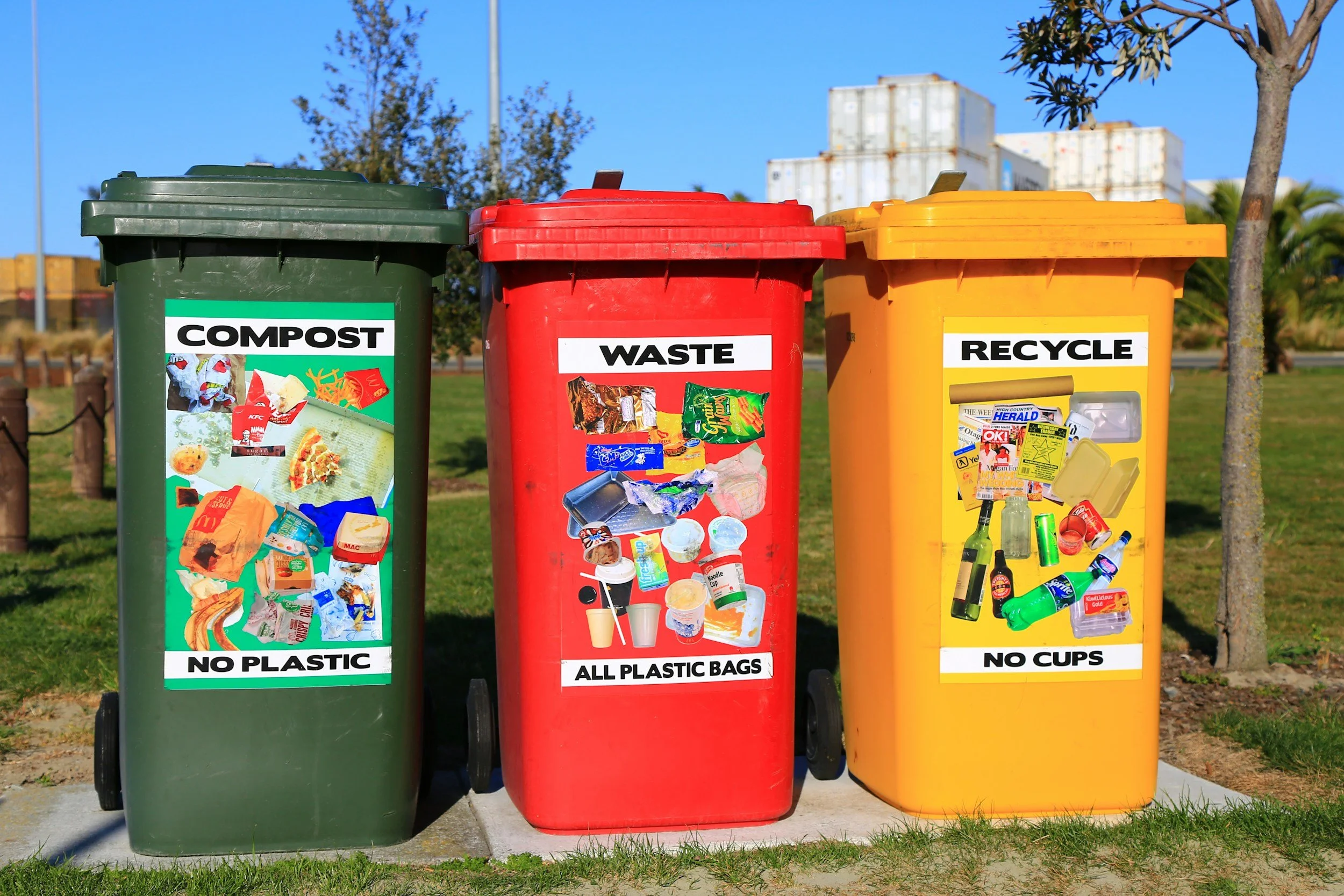
With National Recycling Week (9–15 November) on the horizon, it's a great moment to celebrate what recycling does well. Recycling is a valuable part of a circular economy: it keeps materials in use, supports local reprocessing, and it's a habit almost every Australian household already shares. To everyone sorting, collecting and reprocessing our packaging: thank you.
But recycling was never meant to do the job on its own.
86% of packaging placed on the Australian market is now reusable, recyclable or compostable. Yet only 20% of plastic packaging was actually recycled in 2023–24 (APCO). On paper, we've designed our way there. In practice, most of it isn't coming back.
That gap isn't down to design alone. It's a system challenge:
Infrastructure. Collection, sorting and reprocessing capacity doesn't yet exist for every format, in every region.
Consumer interaction. Confusing labels and inconsistent council rules mean packaging often ends up in the wrong bin, or contaminates the right one.
Regulation. Voluntary targets and stalled national reform haven't yet created the pull needed to close the loop.
End markets. Recycled material has to compete with cheap virgin and imported alternatives.
Packaging design can't fix all of that on its own. But it's the part brands and agencies control today. That's exactly where circular packaging design comes in.
Recyclable is a property. Circular is an outcome.
A pack is only truly recyclable when it's collected, sorted, reprocessed and made into something new, at scale, in the market where it's sold. Miss any one of those steps and "recyclable" becomes a claim rather than a reality.
This is where a lot of well-intentioned packaging comes unstuck. A team ticks the material box (it's PP, it's paper, it's widely recyclable) and moves on. But recovery depends on the whole system: the format size, material, shape and components such as labels, closures, the bin it ends up in, and whether anyone wants to buy the recycled material at the end.
Circular packaging design asks a bigger question. Not "can this be recycled?" but "what's the best way to keep this material in use, or avoid needing it at all?"
“Recyclable is a property of the pack. Circularity is a property of the system. Design is where you get to influence both.”
What's changed in 2026, and why waiting isn't a strategy
If you've been holding off on packaging changes until regulation tells you what to do, 2026 has been a confusing year.
In September, the Federal Government confirmed it won't introduce a new Commonwealth packaging scheme this term. Days later, Environment Ministers agreed packaging reform remains a national priority, and committed to working with industry and exploring harmonised approaches across states.
The recycling system itself is under strain. Recycling Plastics Australia entered voluntary administration in August, and the Australian Council of Recycling has described the state of the plastics sector as a "slow-moving crisis", with recyclers competing against cheap virgin and imported materials (PKN). But there’s good news too: supermarket soft plastics collection is back, and Soft Plastics Stewardship Australia says it now serves almost 70% of Australians.
Overseas, the direction is far clearer. The EU's Packaging and Packaging Waste Regulation (PPWR) has applied since 12 August 2026. From 2030, packaging sold in the EU must be designed for recycling. From 2035, it must be recyclable at scale, through collection, sorting and recycling systems that actually exist.
"Recycled at scale" is the phrase to watch. It marks the global benchmark moving from theoretical recyclability to proven recovery. If you sell into Europe or the UK, it's already on your timeline. If you don't, expect it to shape what retailers and customers ask of you next.
Did you know? Australia's National Packaging Targets
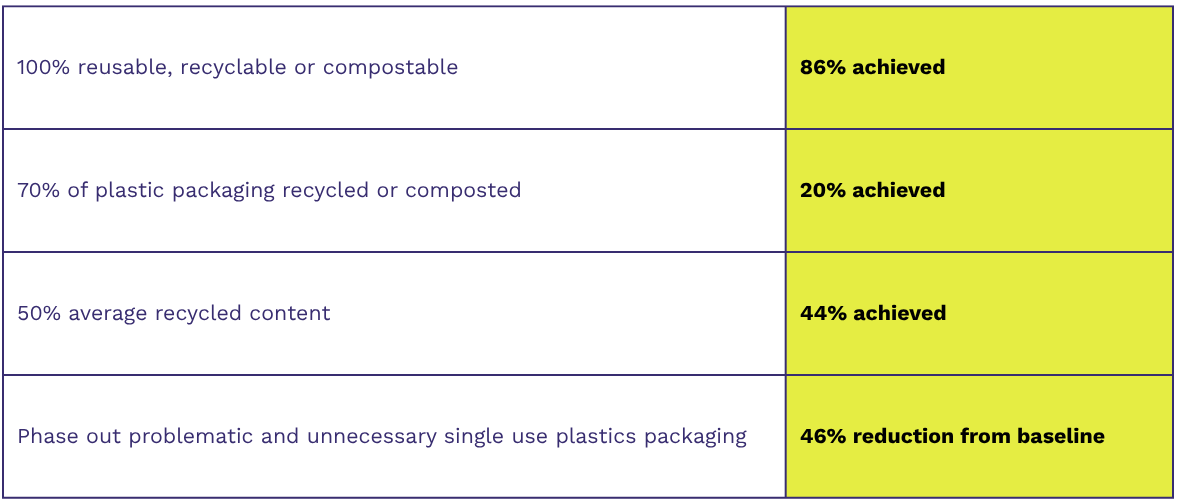
Source: APCO Australian Packaging Consumption & Recovery Data 2023–24 (published December 2025).
Circular packaging design in practice: work down the hierarchy
Circular design isn't one decision. It's a sequence. The simplest way I've found to explain it is the resource hierarchy (you may know it as the waste hierarchy). Start at the top and only move down once you've genuinely exhausted the step above.
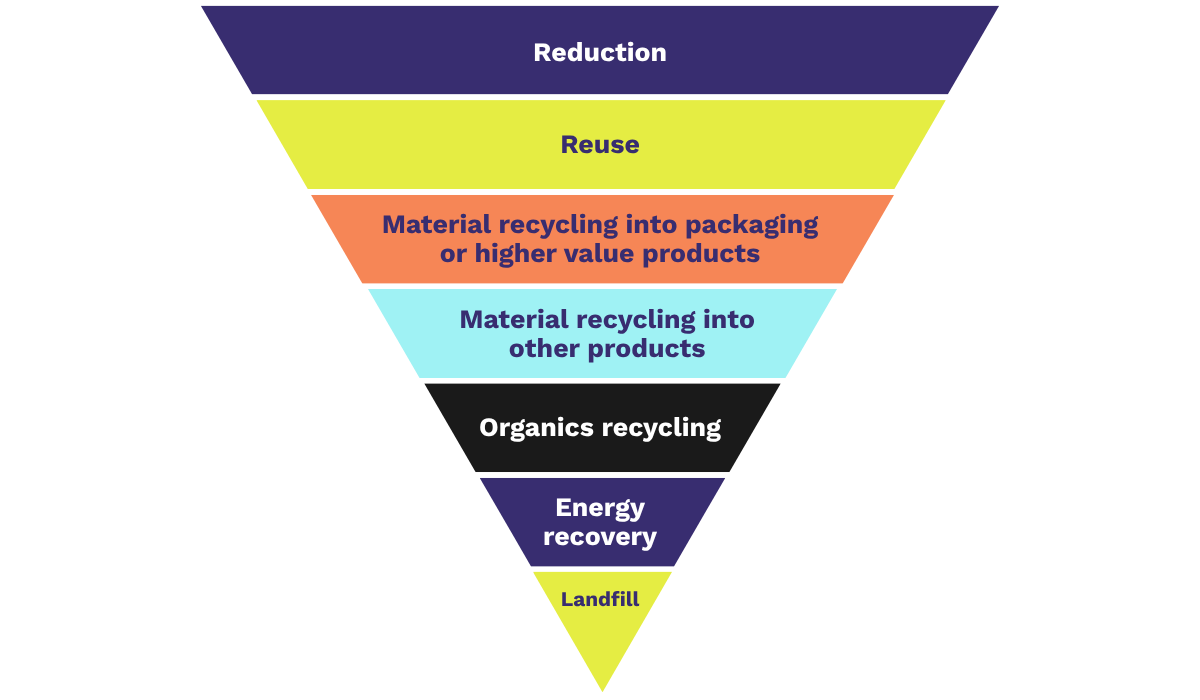
Source: APCO
Rethink. Can you rethink the need for packaging or a component of it, entirely? Overcaps, inserts, sleeves, double-boxing. The most circular pack is the one you didn't need to make.
Reduce. Right-size the format, lightweight where performance allows, and simplify to fewer materials.
Reuse. Is there a reusable or refillable model that works for your product, your customer and your route to market? Not every product suits reuse, but more do than most briefs assume, particularly in B2B scenarios.
Recycle. If it's going to be recycled, design for the system that exists in your markets: mono-materials, compatible labels and inks, components large enough to be sorted, and clear instructions on pack.
Organics recycling. Compostable packaging can play a valuable role in certain applications, but it must consider the product use, certifications and availability of systems to collect and process (hint, these are not wide scale in Australia).
The Ellen MacArthur Foundation frames the upstream innovation opportunities of a circular economy around Rethinking Products, Packaging and Business Models. I spoke about this in our recent webinar with Boomerang Labs.
The business case: why circular design pays
When you design out waste instead of managing it at the end, the benefits show up well beyond the bin.
Lower material costs. Eliminating components, right-sizing formats and lightweighting all mean buying less material, and often lower freight and storage costs too. The cheapest packaging is the packaging you don't need.
A lower environmental footprint. Using less material, keeping it in use for longer and specifying recycled content reduces the carbon, water and virgin resources tied up in every pack, as well as the waste and litter left at the end.
Lower EPR fees. Producer fees are increasingly eco-modulated: the harder your packaging is to recycle, the more you pay. In the UK, packaging rated red for recyclability pays approximately 1.2x the base disposal fee in 2026–27, estimated to rise to 2x by 2028–29. The EU's PPWR is building the same link between fees and recyclability performance. Australia isn't there yet, but an EPR will likely follow the global direction (in time).
Claims you can stand behind. When packaging is designed for the system it actually ends up in, you can back your claims with evidence. That reduces greenwashing risk as ACCC scrutiny tightens, and builds trust with retailers and customers.
Local jobs and stronger local industry. Circular systems need people. Collection, sorting, reprocessing, refill and reuse services create local jobs and keep the value of materials in Australia, rather than in landfill or shipped offshore.
Healthier communities and places. Less packaging waste means less litter in our streets, parks, waterways and oceans, and less pressure on the landfills that sit alongside our communities.
“Circular design isn’t a cost centre. Done well, it’s one of the few sustainability moves that reduces cost, risk and complexity at the same time.”
Practical actions for brands and agencies
For FMCG brands
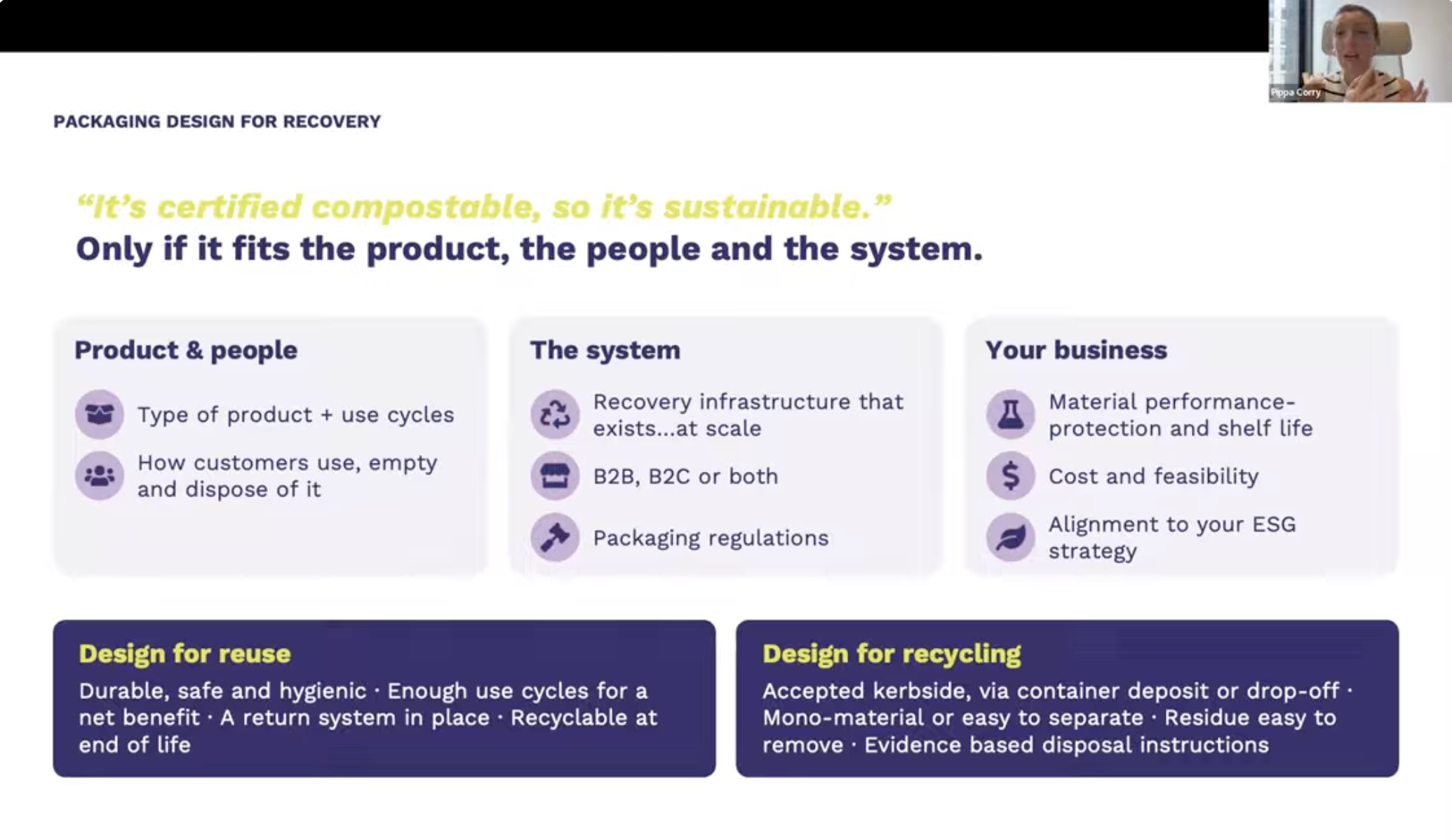
Start with the product and the people, not the material. Map what your product needs (protection, shelf life, use cycles) and how customers use, empty and dispose of it before choosing a format. Preventing product waste is often a bigger win than any material switch.
Go after eliminate and reduce wins first. Audit your range for components you don't need and formats you can right-size. Less material means lower costs today and lower EPR fees tomorrow.
Pilot one reuse or refill model where it fits. Reuse works when packaging is durable, safe and hygienic, gets enough use cycles for a net benefit, and has a return system in place. There is often greater reuse potential in your B2B packaging systems than primary packaging.
Where recycling is the right route, design for real recovery. Check formats against kerbside recovery at scale, keep on-pack claims evidence-based, and specify recycled content to support the system you're relying on.
For design agencies
Brief the whole system, not just the pack. Before concepts start, ask what the product is, how people will use and dispose of it, whether it's B2B or B2C, and what infrastructure and regulations apply where it's sold.
Treat eliminate, reuse and refill as creative territory. Some of the most interesting design work happens when the brief is "less", or when the pack is designed to come back.
Challenge the easy answer. "It's certified compostable, so it's sustainable" only holds if it fits the product, the people and the system. Pressure-test material choices and claims before they reach the client presentation.
Why this matters now
National Recycling Week is a good moment to recognise how far we've come. Recycling will always be an essential part of a circular economy. But it's one part of the journey, not the destination. The goal is to stop packaging becoming waste in the first place.
With national reform on hold, the brands and agencies who lead won't be the ones waiting for a rulebook. They'll be the ones designing for what actually happens to their packaging, and who can prove it.
That's circular packaging design. And while others hesitate, it's a genuine competitive advantage: lower material costs, lower fees, better data and claims you can stand behind.