
Progress in Uncertainty: Packaging opportunity vs regulatory risk: turning uncertainty into strategic advantage
If I had to summarise the current packaging landscape in one word, it would be: complex.
Many of the organisations that reach out to me, both FMCG brands and design agencies, feel overwhelmed by the pace of regulatory change. They’re hearing about the EU’s Packaging and Packaging Waste Regulation (PPWR), Extended Producer Responsibility (EPR), declaration of conformity requirements, recycled content thresholds, and in Australia, uncertainty around what EPR reform will include and when.
They’re unsure what applies to them, what’s coming next, and how urgently they need to act.
The uncertainty is real. But the direction is clear. And within that direction lies opportunity.
The regulatory direction is set - and design decisions now influence commercial outcomes
In Australia, APCO’s FY27 Business Plan signals a shift toward greater industry readiness for EPR. We’re seeing:
Strengthened reporting expectations and emphasis on packaging data integrity
Greater alignment between recyclability guidance and on-pack claims
Movement toward producer responsibility models linked to packaging performance
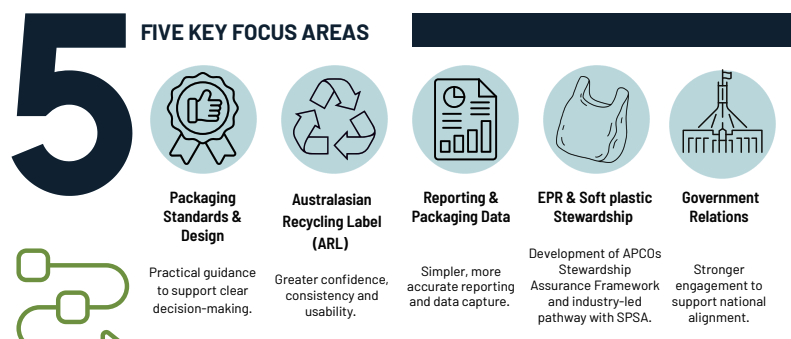
Image source: ‘Designed with industry. Delivering for Australia.’ Australian Packaging Covenant Organisation. 2025
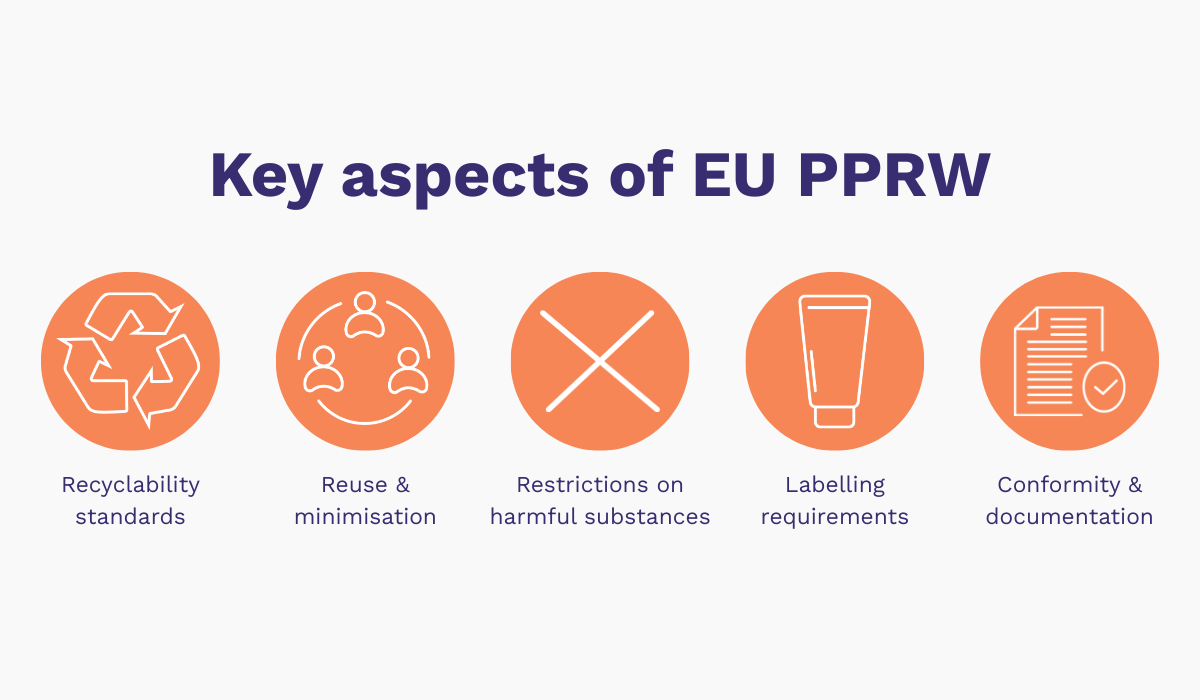
In the EU, PPWR introduces a more prescriptive framework, with a key initial milestone on 12 August 2026. The regulation includes:
EPR fees directly linked to recyclability performance
Mandatory recyclability criteria (recyclable at scale, not just technically recyclable)
Minimum recycled content thresholds for plastic packaging
Restrictions on excessive empty space
Harmonised labelling requirements
The commercial implication is straightforward: packaging design decisions now influence future cost exposure and market access.
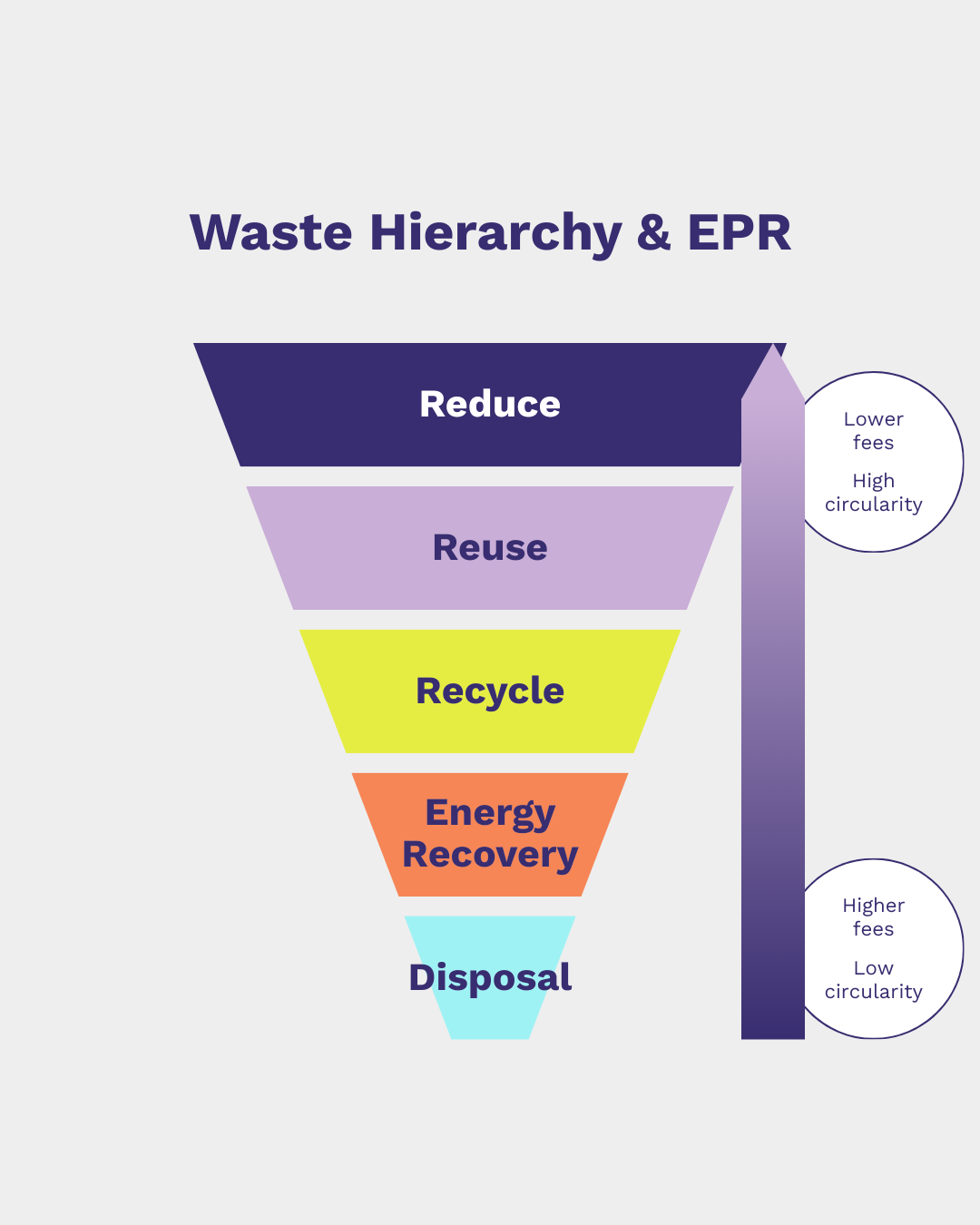
Material choice, format complexity, separability of components - these are no longer just technical design considerations. They affect compliance positioning, fee structures, logistics efficiency and brand credibility.
The real challenge: fragmented systems, not regulation
When brands feel overwhelmed, it’s rarely due to a lack of intent. It’s because packaging sits across procurement, marketing, sustainability, finance and supply chain - with no single consolidated view.
Without a structured packaging framework, I often see:
No roadmap aligned to future EPR direction
No or incomplete packaging data
No centralised view or understanding of packaging, or why aspects are critical
Limited understanding of supplier specifications
Claims made without documented substantiation
Packaging transformation takes time. From assessment to implementation, changes can require 12–24 months once artwork cycles, tooling, inventory run-down and supplier negotiations are factored in.
Early clarity creates optionality. Reactive change reduces it.
The opportunity is not to fear regulation - it’s to design ahead of it.
Sustainable packaging as a strategic lever
The organisations making the most progress are not necessarily the largest. They are the most structured. A packaging assessment frequently unlocks immediate value across:
Data integrity: establishing SKU-level packaging mapping to support APCO reporting, export exposure analysis and future EPR modelling.
Material optimisation: lightweighting, removing redundant components, rationalising secondary packaging and improving pallet efficiency.
Format simplification: reducing multi-material combinations that hinder recyclability or increase future fee exposure.
Recyclability alignment: aligning packaging formats to local recovery infrastructure and phasing out hard to recycle materials and/or packaging formats.
Supplier engagement: requesting verified recycled content data and documented material specifications to future -proof procurement decisions.
The measurable benefits extend beyond compliance:
Lower projected eco-modulated fees
Reduced raw material usage
Improved distribution efficiency
Lower carbon intensity
Stronger retailer relationships
Faster, more confident innovation cycles
Sustainable packaging is no longer purely environmental. It is a strategic system that influencs cost, credibility and resilience.
Key aspects to consider when preparing for packaging regulations
Prioritise action based on risk, volume and commercial impact
Not every SKU needs immediate action. Prioritisation typically considers
High-volume SKUs
Packaging formats with known recyclability barriers
Retail sensitive categories
Packaging impact and risk assessment
This is not a surface level review, understand:
Regulatory exposure interpretation
Identification of recovery pathways by markets
Recyclability performance
High-risk material identification
SKU-level data
Build a future-ready packaging strategy
A robust packaging strategy should:
Align to APCO and evolving global EPR frameworks
Define packaging focus areas and principles
Establish data expectations
Set phased
What this means for FMCG brands
You do not need to redesign your entire portfolio tomorrow, but you do need visibility.
Financial accountability for packaging performance is increasing. That means:
Recyclability will influence cost structures
Recycled content will influence procurement
Data quality will influence reporting confidence
Claims governance will influence brand trust
The most common gap I see is the absence of a consolidated, SKU-level packaging view mapped against operating markets.
Without that, it’s impossible to answer fundamental questions:
Where are we exposed to eco-modulated fees?
Which SKUs are misaligned with local recycling infrastructure?
Where are we over-packaging?
Which claims cannot currently be substantiated?
Clarity precedes control.
What this means for design agencies
If you are advising FMCG clients, regulatory awareness is now part of creative excellence.
Understanding APCO expectations, EPR direction, PPWR implications and recyclability infrastructure strengthens your ability to design commercially resilient packaging.
Agencies that embed circular design principles into their creative process are not just delivering design - they are shaping long-term client strategy.
“Packaging design has moved from being largely aesthetic and marketing-led to becoming even more strategic and operational. It sits at the intersection of brand, regulation, supply chain and sustainability commitments. At Depot, we see our role as translators, bridging regulatory constraints, manufacturing realities and brand ambition to create solutions that stand up long-term, not just at launch.” Depot Design, a long-standing client of philo & co
From overwhelm to opportunity
Regulation will continue to evolve. That is inevitable.
What is within your control is how structured your packaging system is before change accelerates.
Sustainable packaging is not about reacting to compliance deadlines.
It is about building technically robust, commercially aligned systems that support innovation, reduce waste and strengthen brand positioning.
Uncertainty does not have to create paralysis.
With the right assessment and strategy, it can unlock smarter decisions.
Ready to turn clarity into action?
Whether you’re an FMCG brand navigating APCO and global EPR direction, or a design agency strengthening your sustainability capability: Start with structure.
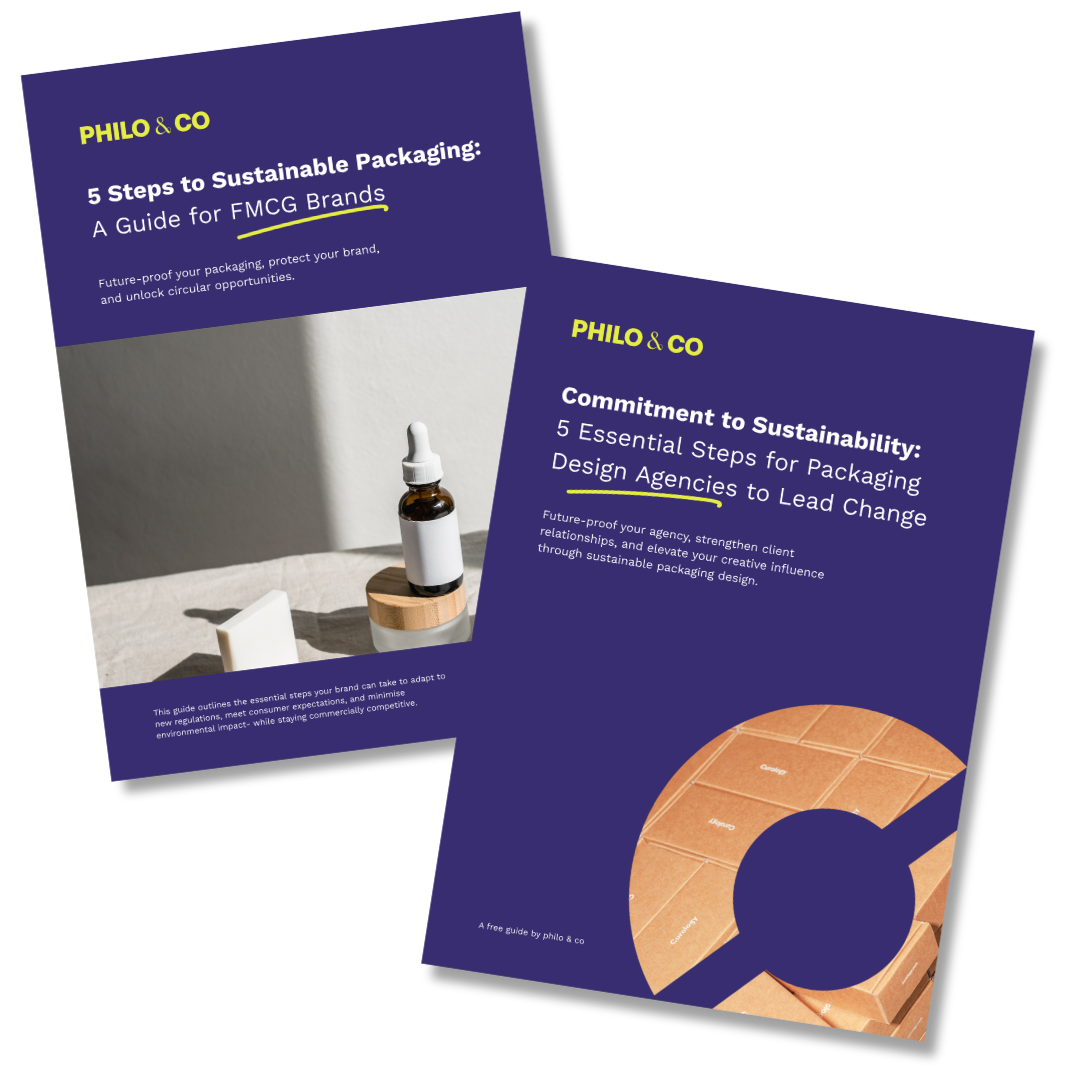
Download one of our free guides:
Or book a 1:1 Ask Pip Expert Session to explore your packaging risk profile, priority actions and how to align upcoming budgets and design decisions with regulatory direction.
Because the advantage doesn’t come from avoiding change. It comes from designing ahead of it.